Biography
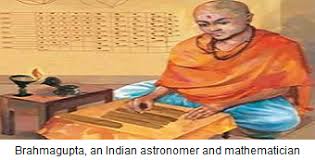
The first rate 7th Century Indian mathematician and astronomer Brahmagupta wrote a few critical works on each arithmetic and astronomy. He become from the state of Rajasthan of northwest India (he’s frequently known as Bhillamalacarya, the teacher from Bhillamala), and later have become the top of the astronomical observatory at Ujjain in important India. most of his works are composed in elliptic verse, a commonplace practice in Indian arithmetic on the time, and consequently have some thing of a poetic ring to them.
It appears probable that Brahmagupta’s works, mainly his maximum well-known text, the “Brahmasphutasiddhanta”, were delivered through the 8th Century Abbasid caliph Al-Mansur to his newly founded centre of gaining knowledge of at Baghdad on the banks of the Tigris, imparting an critical hyperlink between Indian mathematics and astronomy and the nascent upsurge in technology and mathematics inside the Islamic global.
In his paintings on mathematics, Brahmagupta defined how to discover the dice and dice-root of an integer and gave policies facilitating the computation of squares and square roots. He also gave guidelines for handling 5 sorts of combos of fractions. He gave the sum of the squares of the first n herbal numbers as n(n + 1)(2n + 1)⁄ 6 and the sum of the cubes of the primary n natural numbers as (n(n + 1)⁄2)².
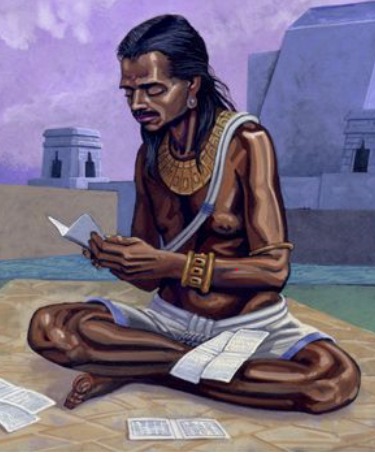
Brahmasphutasiddhanta-Treat Zero as a Number
Brahmagupta’s genius, although, got here in his treatment of the idea of (then rather new) the quantity zero. despite the fact that frequently also attributed to the 7th Century Indian mathematician Bhaskara I, his “Brahmasphutasiddhanta” might be the earliest recognised textual content to treat 0 as a number of in its very own right, rather than as without a doubt a placeholder digit as become completed by means of the Babylonians, or as a symbol for a loss of amount as become executed by using the Greeks and Romans.
Brahmagupta hooked up the basic mathematical guidelines for handling 0 (1 + zero = 1; 1 – 0 = 1; and 1 x zero = zero), even though his understanding of division by means of 0 became incomplete (he idea that 1 ÷ 0 = 0). nearly 500 years later, in the twelfth Century, any other Indian mathematician, Bhaskara II, showed that the solution ought to be infinity, no longer 0 (considering that 1 can be divided into an countless quantity of portions of size 0), an answer that become taken into consideration accurate for centuries. however, this common sense does not explain why 2 ÷ 0, 7 ÷ zero, etc, need to additionally be zero – the present day view is that a variety of divided by means of 0 is clearly “undefined” (i.e. it doesn’t make sense).
Brahmagupta’s view of numbers as abstract entities, as opposed to just for counting and measuring, allowed him to make but every other huge conceptual jump which could have profound result for destiny arithmetic. formerly, the sum three – 4, as an example, was taken into consideration to be both meaningless or, at fine, simply zero. Brahmagupta, but, found out that there will be the sort of element as a negative quantity, which he referred to as “debt” as a against “property”. He expounded at the regulations for handling negative numbers (e.g. a negative times a poor is a effective, a terrible instances a superb is a bad, and many others)
furthermore, he mentioned, quadratic equations (of the sort x2 + 2 = 11, as an instance) could in principle have two possible solutions, one in all which may be negative, due to the fact 32 = 9 and -32 = nine. further to his paintings on solutions to general linear equations and quadratic equations, Brahmagupta went yet further by means of considering structures of simultaneous equations (set of equations containing more than one variables), and fixing quadratic equations with unknowns, something which was now not even taken into consideration within the West till one thousand years later, while Fermat changed into considering similar troubles in 1657.
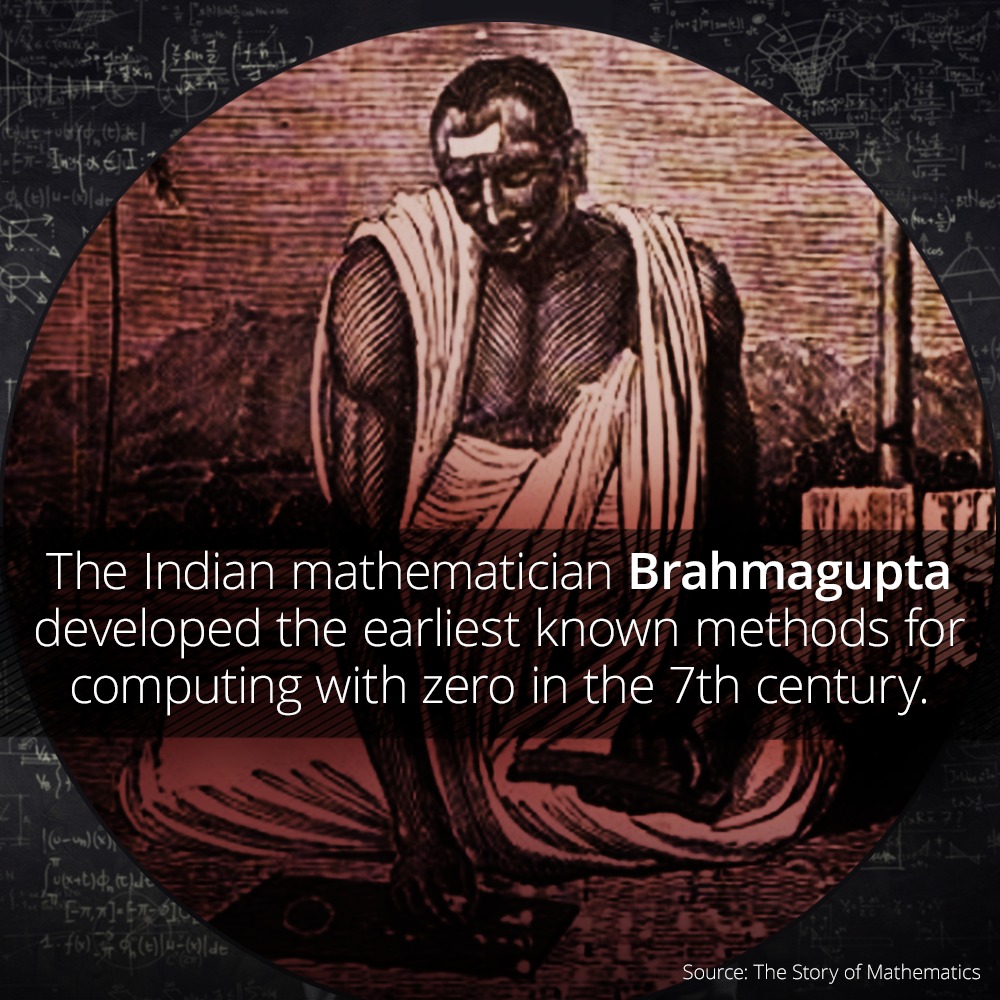
Brahmagupta’s Theorem on cyclic quadrilaterals
Brahmagupta even tried to put in writing down those alternatively summary standards, the usage of the initials of the names of colors to symbolize unknowns in his equations, one of the earliest intimations of what we now realize as algebra.
Brahmagupta devoted a sizeable portion of his paintings to geometry and trigonometry. He established √10 (3.162277) as a good realistic approximation for π (3.141593), and gave a components, now known as Brahmagupta’s formula, for the location of a cyclic quadrilateral, as well as a celebrated theorem on the diagonals of a cyclic quadrilateral, normally referred to as Brahmagupta’s Theorem.
Brahmagupta achievements
Brahmagupta defined the properties of the number zero, which was crucial for the future of mathematics and science. Brahmagupta enumerated the properties of zero as:
★ When a number is subtracted from itself, we get a zero
★ Any number divided by zero will have the answer as zero
★ Zero divided by zero is equal to zero
• Discovered the formula to solve quadratic equations.
• Discovered the value of pi ( 3.162….) almost accurately. He put the value 0.66% higher than the true value. ( 3.14)
• With calculations, he indicated that Earth is nearer to the moon than the sun.
• Found a formula to calculate the area of any four-sided figure whose corners touch the inside of a circle.
• Calculated the length of a year is 365 days 6 hours 12 minutes 9 seconds.
• Brahmagupta talked about ‘gravity.’ To quote him, ‘Bodies fall towards the earth as it is in the nature of the earth to attract bodies, just as it is in the nature of water to flow.’
• Proved that the Earth is a sphere and calculated its circumference to be around 36,000 km (22,500 miles).
• Brahmagupta established rules for working with positive and negative numbers, such as:
Ø Negative ++ Negative number == Negative number
Ø Subtracting a Negative from a positive number is the same as adding the two numbers.
Ø Negative X Negative number== Positive number.
Ø Positive number ÷ Negative number == Negative number
Summary
Indian philosophy reiterates that we’re a small a part of a Brahmand, the cosmos or the universe. This humbling knowledge become possibly the idea of the idea of a 0 or a void as it came from a tradition that conceived and stated the concept of the endless. A image (zero)(0) denoting “not anything” became a part of Indian lifestyle. This becomes particularly relevant as it suggests a vibrant, philosophical subculture that acknowledged the energy of nothingness and hence simply known the energy of mathematics and its function in the order of nothingness.
although Brahmagupta thought of himself as an astronomer who did a few mathematics, he is now specifically remembered for his contributions to mathematics. He became honoured by means of the name given to him by a fellow scientist ‘Ganita Chakra Chudamani’ which is translated as ‘The gem of the circle of mathematicians’.
 Indian Ancient Scientists by Shreya Singh