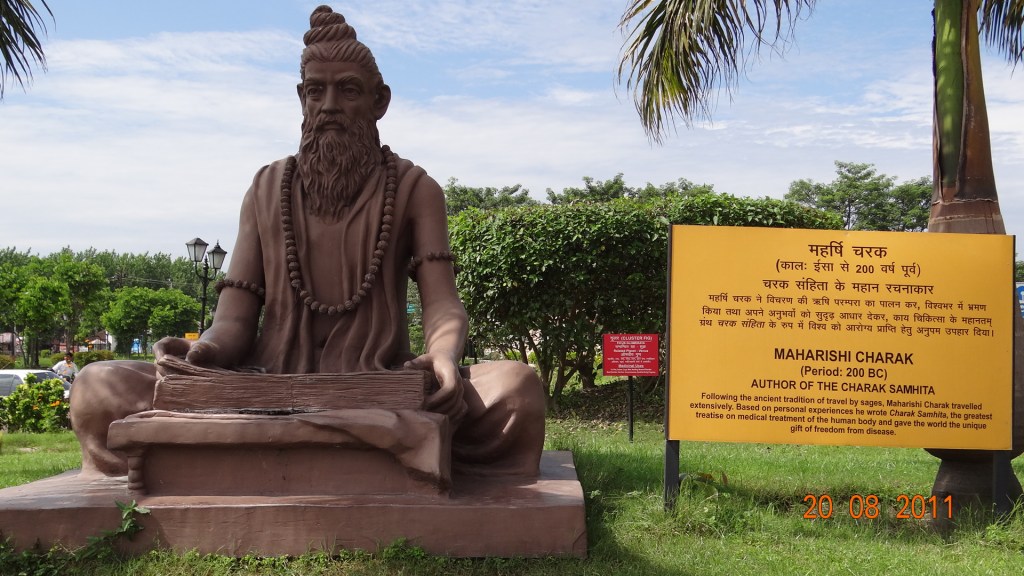
Charaka-samhita, likewise spelled Caraka-samhita or Caraka-saṃhitā, extensive text on old Indian medication credited to Charaka, who was a specialist of the customary arrangement of Indian medication known as Ayurveda. Charaka is remembered to have thrived at some point between the second century BCE and the second century CE.
The Charaka-samhita as it exists today is remembered to have emerged in the first century CE. Concentrates on antiquated Indian medication demonstrate, nonetheless, that the first text was composed a few centuries sooner by Agnivesha, who was one of six followers of Ayurvedic researcher Punarvasu Atreya (the other five devotees were Bhela, Jatukarna, Parashara, Harita, and Ksharapani). Every one of the supporters proceeded to make samhitas, integrating thoughts from Atreya’s way of thinking as well as their comprehension own might interpret the subject. Of those, the Agnivesha-samhita, created by Agnivesha, was one of a kind top to bottom and content. Later refined and explained by Charaka, it came to be known as the Charaka-samhita. Charaka isolated the composition into eight sections, or ashtanga sthanas: sutra, nidana, vimana, sarira, endriya, chikitsa, kalpa, and siddha; each part contained various parts.
While Charaka dug into all parts of medication, including the rationale and reasoning behind the Indian restorative framework, he put unique accentuation on the finding of infection and regarded Ayurveda as an extensive arrangement of medical services that managed both preventive and corrective perspectives. He additionally managed subjects like fetal age and advancement, life structures of the human body, and capability and glitch of the body as indicated by the tridosha (the three humors of the body) — vata, pitta, and kapha. He likewise talked about the characterization of different sicknesses.
Acharya Charak was a significant Indian medicine scientist. He was also known as the “Father of Indian Medicine.” As per Charaka, life isn’t foreordained by wellbeing and sickness; Instead, a person’s life can be extended simply by making some personal efforts and paying attention to their lifestyle. According to the Ayurvedic tradition and science, preventing diseases is more important than treating them. It also depends on a person’s way of life, as well as the four seasons and nature, which are responsible for a person’s complete wellness. Acharya Charak has attributed the following statements: A doctor who fails to enter a patient’s body with knowledge and understanding will never be able to treat illnesses. He should first focus on all of the factors that affect a patient’s infection, including the climate, and then recommend treatment. Another of his comments is: The pursuit of a cure is more important than the prevention of disease. These observations were not taken into consideration, but they were included in his well-known treatise on Ayurveda, Charaka Samhita. The treatise contains a number of observations that, as was mentioned earlier, are still relevant today. The physician Charaka introduced the idea of metabolism, digestion, and immunity, which he also translated into the Vedas as body functions since it requires three principles (also known as doshas) that are movement (Vata), transformation (pitta), and finally, lubrication and stability (Kapha). The doshas are also known as humor, and they are sometimes associated with the normal functioning of the body’s fluids or semi-fluids. Bile, wind, and phlegm are the names given to these fluids. The production of bile, phlegm, and wind is sometimes referred to as humor—a normal bodily fluid or semi-fluid. These doshas are created when the dhatus (blood, flesh, and marrow) react with the food that is eaten. Even when the amount of food eaten is the same in different bodies, different doshas are produced. As a result, it is said that each body is unique. Weight, strength, and energy are the factors that define the body differences. The imbalance between the three doshas and how they are distributed in the body is what causes illness. He prescribed some medicines to keep the balance. He was also familiar with the fundamentals of genetics, such as the factors (now known as genes) that determine a child’s sex and did not place any value on germs in the body. According to him, the mother or father are not responsible for any genetic defect in the child, including blindness and lameness; rather, it happens because of a deformity in the guardians’ ovum and sperm.
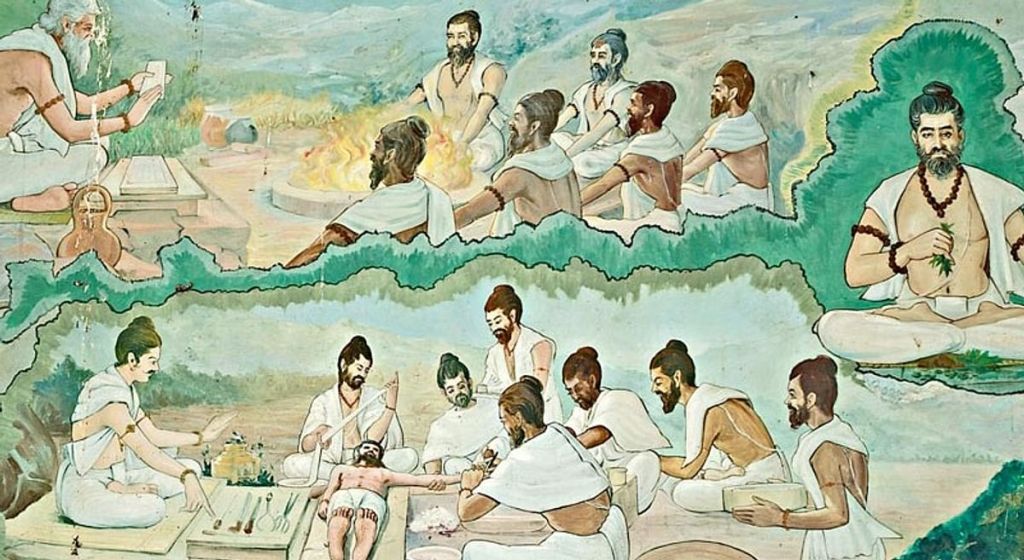
Charaka concentrated on the life systems of different organs as well as the whole human body. He also stated that there are 360 bones in the human body, including the teeth. He was also correct when he said that the heart only has one cavity but that it is a controlling center. He also said that there are 13 major channels that connect the body and the heart. Other channels of varying sizes, in addition to these ones, supply nutrients and enable the body to eliminate waste. • Agnivesa wrote an encyclopedia under the physician Atreya in the eighth century B.C. After being revised by Charaka, the treatise gained popularity and became known as the Charaka Samhita. He also stated that the body may develop certain deformities if there are any major channels. The six schools of medicine were founded by the disciples of the sage Punarvasu Atreya based on the Charaka tradition. It was translated into a number of foreign languages, including Latin and Arabic, and was considered standard work for nearly two millennia. Harita, Parashara, Jatukarna, Agnivesha, Jatukarna, Bhela, and Ksharapani were his disciples. Together, they composed a Samhita. Agnivesha’s Samhita was regarded as the best; Charaka later revised it, giving it the name Charaka Samhita. Dridhbala revised the Charaka Samhita.
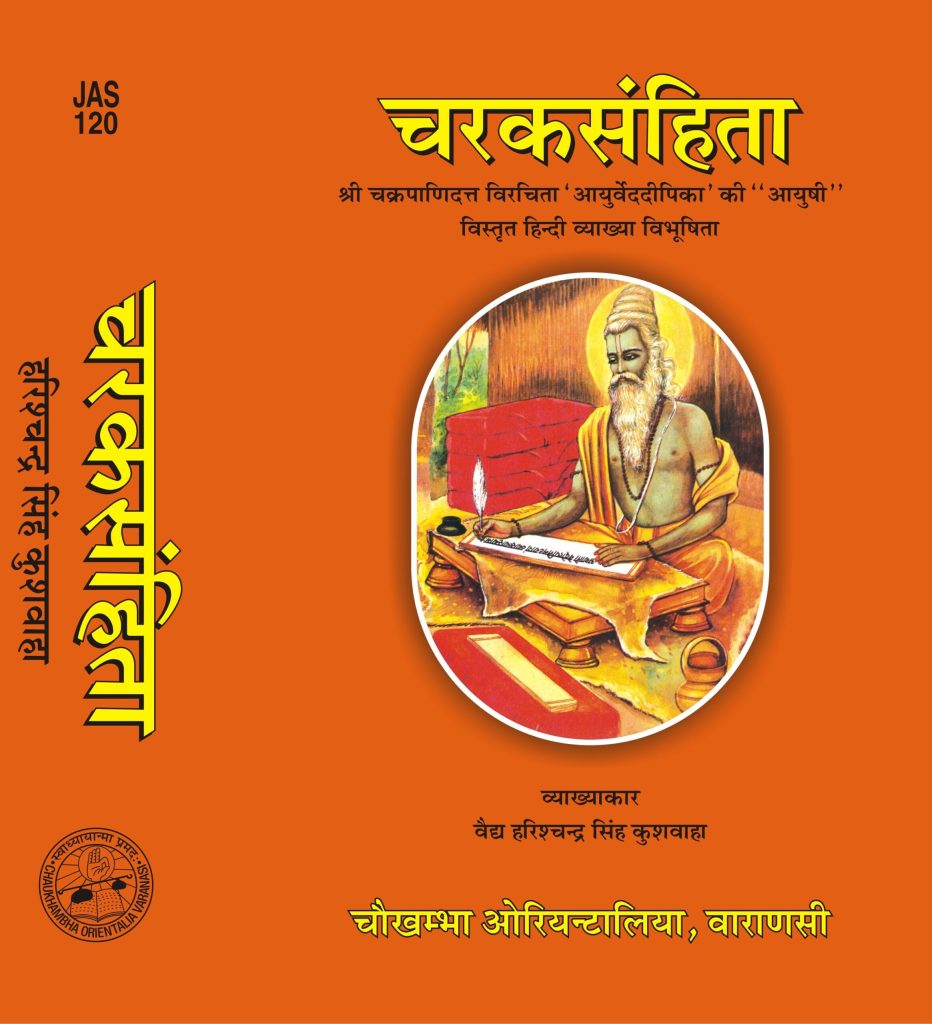
Ayurveda is traditionally divided into eight branches in Charaka Samhita, which are:
• kayachikitsa or internal ayurvedic medicine
• Bala chikitsa or pediatrics
• bhootavidya or treatment of demoniacal diseases
• urdhwanga chikitsa or ENT with ophthalmology
• salyatantra or ayurvedic surgery
• agadatantra or toxicology
The Vedic era heralded a new era of scientific and technological advancement. Science arose from the religious plane during Vedic times. The Vedic people had an impact on the development of Indian science. Understanding real-world phenomena in a rational and scientific manner began with the study of natural phenomena such as rainfall, the appearance of the sun and moon, seasonal changes, and agriculture. This naturally led to theories about physical processes and natural forces, which are now studied as distinct topics within various branches of physical science.
Conclusion
Later advancements in mathematics, astronomy, astrology, medicine, surgery, and other fields in ancient India were significant by any standard. It can be understood through the contributions of scholars in various fields/subjects.
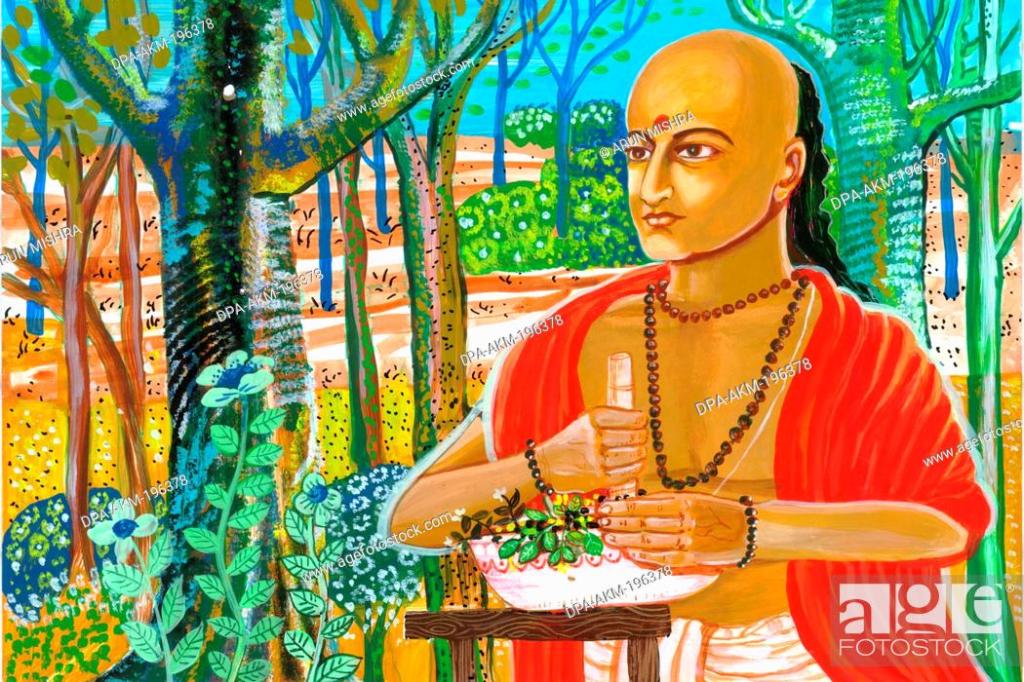
 Indian Ancient Scientists by Shreya Singh