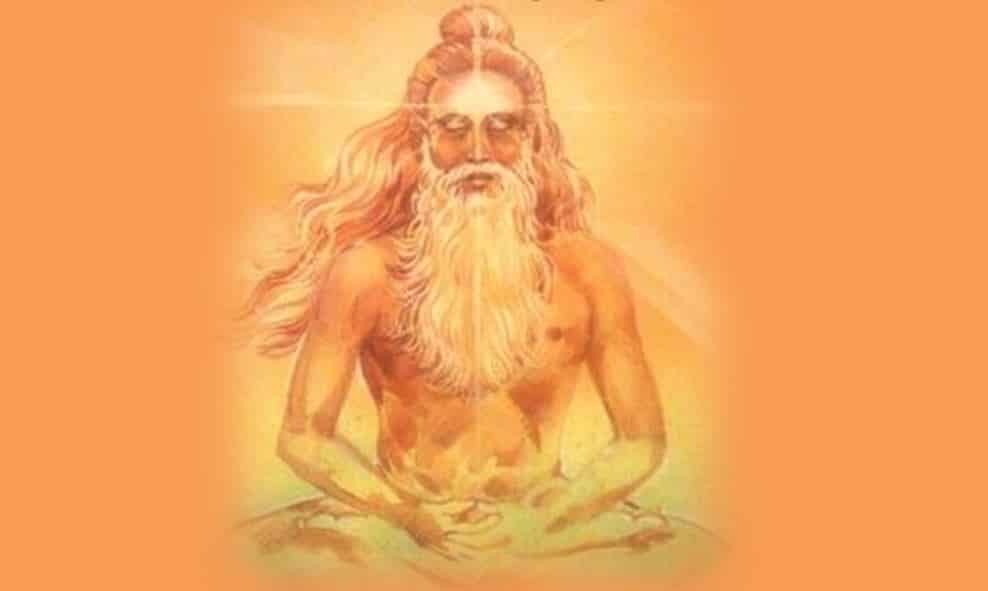
Patanjali was a great spiritual leader in ancient times who honed the spirit of the spiritual path in the word wisdom known as the Yoga Sutras. He identifies the steps each soul must take on the endless spiritual return journey. According to a legend, it fell from the sky into the hands of a woman (Anjali) in the form of a small snake, hence the name Patanjali. story of life Patanjali’s life story is mostly unknown. It is filled with legends and contradictions. There is no clear evidence of the birth of Maharshi Patanjali. Patanjali’s date of birth and life are predicted to differ by millennia. Most scholars date it to the second and third centuries BC, while others assert that he lived from the 4th to 7th centuries BC. Due to later writers’ confusing changes and additions to his works, Maharishi Patanjali lived in Nepal, Kashmir, Sri Lanka and parts of India. There is an explanation of Patanjali in the Matsya, Vayu and Skanda Purana that the period in the life of Maharishi Patanjali occurred around the time of Vyas and Panini. The Rishis mastered the power of yoga immensely and lived for thousands of years. They have the ability to live or die according to their will. This is the reason for the presence of rishis in modern times. In the Puranas, the life of the rishis is said to span the ages, and Shri Patanjali is one of these mighty Rishis.
Most scholars date Patanjali based on the written version of the Yoga Sutras that have come to us. But Patanjali himself probably lived at a much earlier time. There are also stories of his incredible psychic powers and birth. The truth is that no one knows much about his life, even when he was alive. But it doesn’t matter. However, we know him through his works. The embodiment of Adi Shesha.
It is believed that Maharishi Patanjali is an incarnation of Adishesha, the serpent of god Vishnu, which is the first expansion of Lord Vishnu’s ego. Ancient texts often refer to Patanjali as an incarnation of the Thousand-Headed Serpent King named Ananta Shesha. He is sometimes depicted as half-man, half-snake. Patanjali’s Yoga Sutras
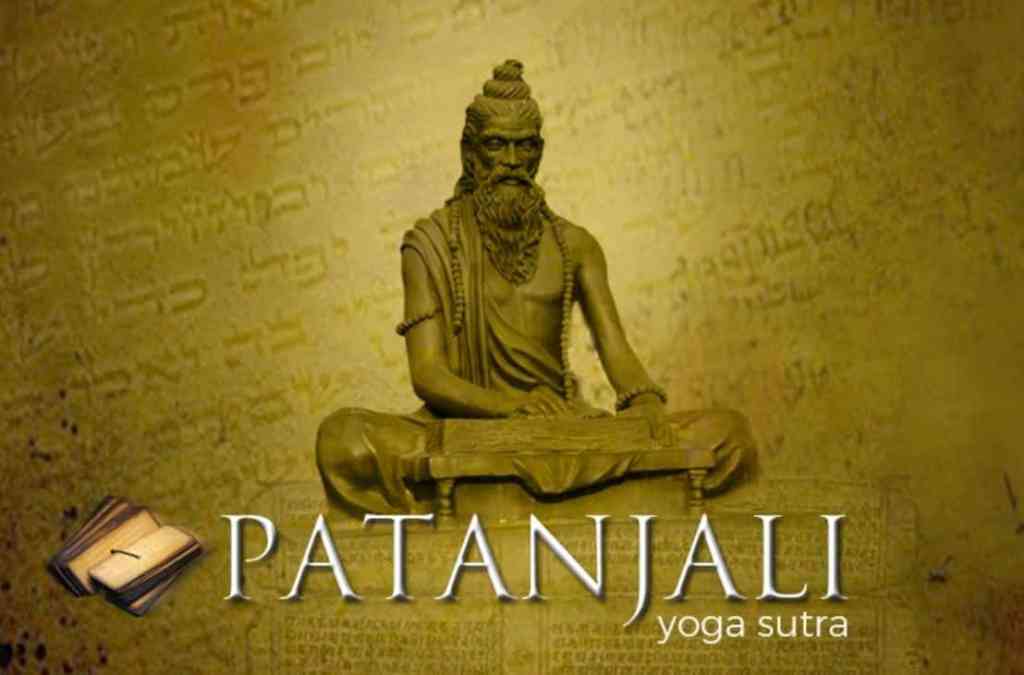
It is said that Patanjali is often referred to as the founder of the Yoga Sutras. The origins of yoga have been passed down orally for thousands of years. Yoga of Patanjali is one of the famous darshans of Hindu philosophy. Patanjali has synthesized and organized knowledge of yoga from much older traditions. The Yoga Sutras are one of the foundational texts of classical yoga philosophy. Maharishi Patanjali is considered to be the compiler of the Yoga Sutras and the author of a commentary on Panini’s Ashtadhyayi, called the Mahabhasya. The Yoga Sutras have 196 Sanskrit suttas organized into four chapters. The yoga sutras were collected between 500 BC and 200 BC. The four chapters of Patanjali’s Yoga Sutras are named after their themes; Samadhi Pada, Sadhana Pada, Vibhuti Pada and Kaivalya Pada.
1. Samadhi Pada: The first chapter of Patanjali’s Yoga Sutras gives the definition and purpose of Yoga. Various methods that can be used to achieve the goals of yoga are included.
2. Sadhana Pada: The second chapter covers the practical approach to achieving the goals of Yoga. It also talks about eight branches of yoga known as Ashtanga yoga. 3. Vibhuti Pada: Speaks of the results, power and manifestation achieved by Yoga.
4. Kaivalaya Pada: The last chapter of the Patanjali Yoga Sutra covers the path of devotion, the path of karma and the path of knowledge.
Patanjali’s yoga sutras are also sometimes called Raja Yoga or Royal Yoga.
• Yamas: these are instructions on how to interact with the outside world on a social level.
• Niyamas: it symbolizes instructions for self-discipline.
• Asana: Asana refers to the sitting position, which must be stable and comfortable so that yogis can meditate for a long time.
• Pranayama: Pranayama means controlling our energy or life force.
• Pratyahara: through it, a person gains the ability to derive meaning from his or her objects, thus achieving perfect control over the senses.
• Dharana: This involves focusing the mind on a single object.
• Dhyana: It includes the meditative state.
• Samadhi: Samadhi simply means the state of union with God. By contemplating deeply on any aspect of God, one loses self-awareness and becomes completely absorbed in it.
Patanjali Sloka
Verses on Maharishi Patanjali – Yogena Cittasya Padena Vaacam (Yogena Cittasya Padena Vaacam)
योगेन चित्तस्य पदेन वाचां ।
मलं शरीरस्य च वैद्यकेन ॥
योऽपाकरोत्तमं प्रवरं मुनीनां ।
पतञ्जलिं प्राञ्जलिरानतोऽस्मि ॥
Yogena Cittasya Padena Vaacaam |
Malam Shariirasya Ca Vaidyakena Free Mp3 Download
Yo[a-A]paakaro[a-U]ttamam Pravaram Muniinaam |
Patan.jalim Praan.jalir-Aanato[a-A]smi ||
Feel:
I bow before the one who has purified the defilements of Mind by removing Chitta Vrittis through Yoga, who has purified the expression of the Word through the Pada (Grammar), and who has purified the defilements of the Body possible through Vaidya (Medical Science). One who specializes in removing impurities from body, mind and speech, before the best of Munis, Patanjali, I bow my hands together.
 Indian Ancient Scientists by Shreya Singh